

Shooting Video in Turkey as a Foreign Brand: Permits, Crew and What to Plan For
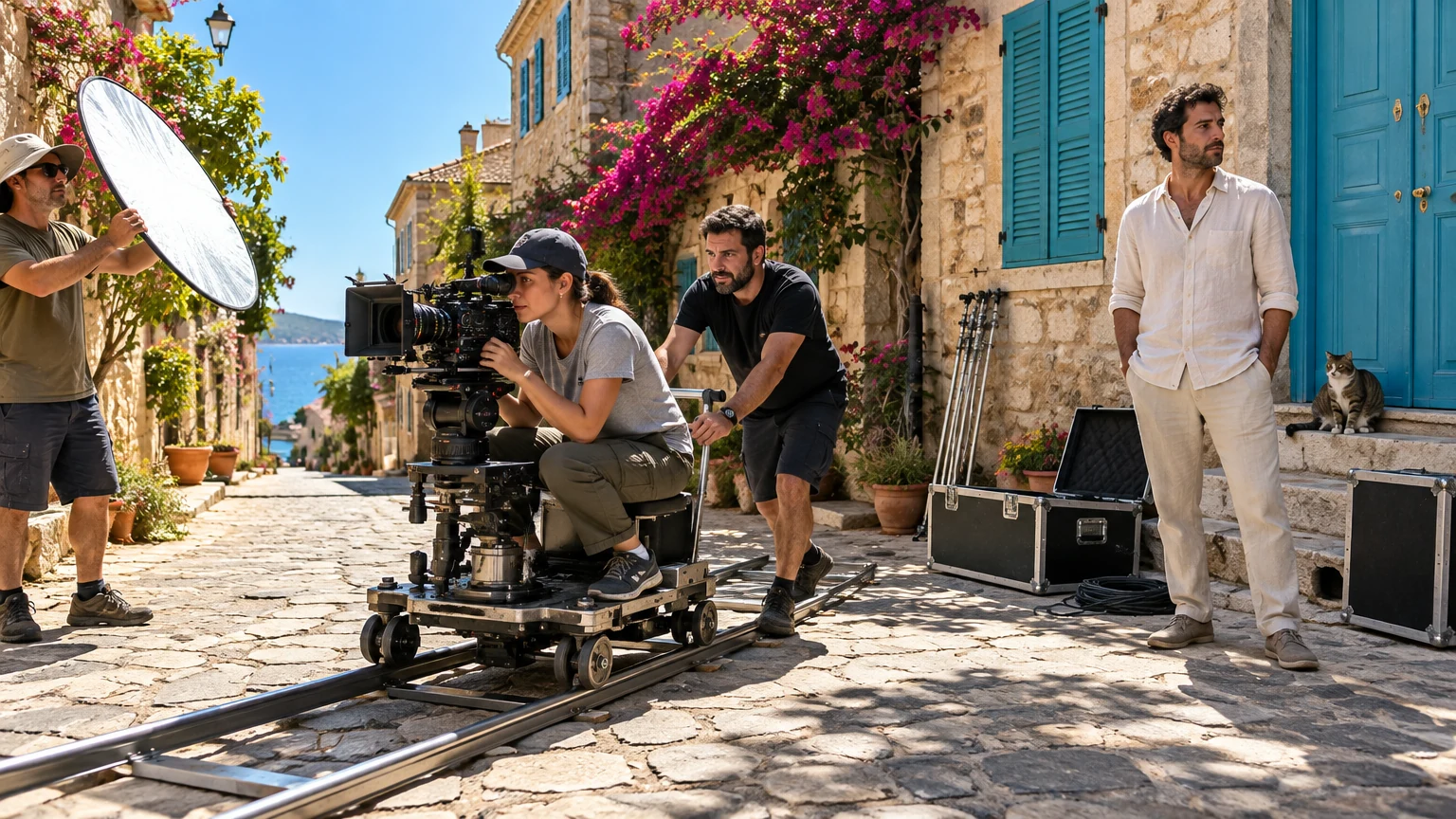
Most foreign brands find out two weeks before the shoot that a permit exists. Foreign film producers, directors and companies who want to shoot in Turkey apply for a filming permit to the Directorate General of Cinema (Sinema Genel Müdürlüğü) under the Ministry of Culture and Tourism, through its online system at filmingpermit.ktb.gov.tr. The formats covered include advertisements, video clips, documentaries, feature films, television films, series, programmes and short films — so a brand film or commercial is inside the regime, not outside it. The application requires at least one host who is a citizen of the Republic of Türkiye, known as the mihmandar or fixer, who must also submit an evaluation report after filming, and the scenario and synopsis must be sent to the Directorate in Turkish both at application and after the shoot.
Domestic producers follow a different route, applying to Provincial Directorates of Culture and Tourism. That difference is the reason the first decision — shoot as a foreign production, or commission a Turkish production company — changes more about your schedule and paperwork than any creative choice you will make. This article covers that decision, the permissions stack, crew, equipment and customs, drones, filming people under Turkish data protection rules, and the scheduling realities that catch out imported production plans.
Table of Contents
- The first decision: foreign production or local commission
- The filming permit for foreign productions
- Location permissions beyond the national permit
- Crew: what you are actually hiring
- Equipment, customs and the ATA Carnet
- Drones and aerial footage
- People on camera: casting, releases and KVKK
- Scheduling realities
- What actually drives the budget
- Common mistakes
- Frequently asked questions
The first decision: foreign production or local commission
There are two ways to put a camera on the ground in Turkey, and they carry different administrative weight.
| Shoot as a foreign production | Commission a Turkish production company | |
|---|---|---|
| Permit route | Filming permit from the Directorate General of Cinema, online application | Domestic route through Provincial Directorates of Culture and Tourism |
| Mandatory local party | At least one Turkish-citizen host (mihmandar), who also reports after filming | The production company itself |
| Who carries the admin | Your team, with the host | The production company |
| Crew and kit | Travelling crew plus local hires; equipment may need temporary import | Local crew and local kit as standard |
| Creative control | Highest; your director, your team | Depends on the brief and the relationship |
| Best for | A global campaign shot to one creative standard across markets | Turkey-specific assets, volume content, recurring production |
Two observations that matter more than the comparison. Most brands running a Turkish programme end up commissioning locally for anything recurring and reserving the travelling-production model for flagship campaigns, because the administrative overhead is paid once per shoot rather than once per campaign. And a hybrid is common and workable: a foreign creative director and DOP working with a Turkish production company, crew and kit, which keeps the creative standard while the local company carries the paperwork and the logistics.
If the brand has no Turkish legal presence, that is a separate question from the shoot, and it affects contracts, invoicing and withholding rather than permits. Our guide to whether you need a Turkish company to run digital ads in Turkey covers the adjacent entity question.
The filming permit for foreign productions
The permit is an application, not a formality, and the dependency that most often delays it is the host rather than the paperwork.
What the official guidance establishes:
- Who applies. Foreign film producers, directors and companies wishing to shoot in Turkey. Domestic producers apply instead to the Provincial Directorates of Culture and Tourism.
- Where. Online, through the Ministry of Culture and Tourism’s filming permit system.
- What is covered. Advertisements, video clips, documentaries, feature films, television films, series and programmes, and short films.
- The host requirement. At least one host who is a citizen of the Republic of Türkiye. After filming, that host — the fixer or mihmandar — submits an evaluation report.
- Language. The scenario and synopsis are sent to the Directorate in Turkish, both with the application and after filming is completed.
Three practical consequences for a brand production. The script has to exist in a finished, translatable form earlier than a commercial schedule usually assumes, because a synopsis in Turkish is part of the application rather than a post-production detail. The host is a named role with a post-shoot obligation, so it should be contracted as such rather than treated as an informal local contact. And because the official pages publish the procedure without a stated lead time, the planning assumption should be that the permit sits on the critical path and is started as soon as the dates and locations are known — then confirmed directly with the Directorate for your specific production.
Verify the current procedure, document list and timing with the Directorate General of Cinema or Turkish counsel before committing to dates. Procedures and systems change, and a published overview is not a substitute for confirmation on your own project.
Location permissions beyond the national permit
A filming permit is permission to produce. It is not automatically permission to be in a specific place, and the second layer is where location plans unravel.
The layers that typically apply:
- Public streets and squares. Municipal permission, often with conditions on vehicles, generators, road closure and timing. In İstanbul this is district-level as well as metropolitan, which means the relevant authority depends on where the camera stands.
- Museums, archaeological sites and historic monuments. Permission through the Ministry of Culture and Tourism and the responsible site authority, usually with fees and restrictions on equipment, crew size and commercial use.
- Privately owned spaces. Shopping centres, office buildings, hotels, factories, residential complexes — each with its own approval, fee and insurance expectations.
- Transport infrastructure. Airports, ports, metro and rail have their own operators and their own processes.
- Coastal and protected areas. Often an additional authority on top of the local one.
Two planning notes. Iconic locations carry the longest lead times and the tightest commercial restrictions, which is precisely why so many Turkish shoots build the recognisable skyline into a controlled establishing shot and film the working scenes somewhere more practical. And a location that was straightforward for a documentary crew may be treated differently for an advertisement, because commercial use frequently sits under a separate permission and tariff.
Crew: what you are actually hiring
Turkey has a deep production industry serving domestic advertising, television and a large drama export business, so crew depth is rarely the constraint. Getting the right structure is.
The roles a foreign brand most often under-specifies:
The fixer or production service company. On a foreign production this is not optional — the host requirement makes it a named role — and the function is wider than logistics: permissions, location scouting, local contracts, crew assembly, and the post-shoot report. Treat this as the most consequential hire on the production.
The production manager. Distinct from the fixer, and the person who makes the schedule survive contact with traffic, weather and permissions.
A Turkish-speaking first assistant director. A set runs in the language the crew speaks. A foreign director working through an interpreter without a strong first AD loses time on every setup.
Casting with local judgement. Casting read from abroad on self-tapes frequently misses register — how a line lands, whether a delivery reads as natural or as acted, whether a face reads as local to a Turkish audience rather than as generically Mediterranean.
Script supervision in both languages, where the dialogue is Turkish and the approving client is not Turkish-speaking. Catching a line that is correct but unnatural on set costs minutes; catching it in the edit costs a reshoot.
Insurance is the other item imported budgets routinely omit. Public liability cover is a practical condition of many location permissions, particularly municipal street filming and privately owned venues, and equipment cover written for another territory may not respond to a loss in Turkey. Where a travelling crew is involved, confirm that personal accident and travel cover extends to working as crew rather than to travel alone. Agreeing who carries which policy — the brand, the production company or the fixer — belongs in the contract rather than in a conversation on the first shoot day.
Medyae’s production service covers local shooting and editing alongside design and animation, which is the route most foreign brands take for recurring Turkish content rather than mounting a travelling production for each campaign.
Equipment, customs and the ATA Carnet
Bringing your own kit is usually a customs project rather than a packing decision. Professional equipment entering Turkey temporarily needs a temporary admission route, and the standard instrument is the ATA Carnet — the international document used for temporary importation of professional equipment, administered in Turkey through the Union of Chambers and Commodity Exchanges of Türkiye (TOBB).
Four things worth settling early:
- Decide kit-in versus kit-local before budgeting. Turkey has a well-equipped rental market, and hiring locally removes the customs path entirely. The case for travelling kit is usually a specific camera, lens set or specialist rig rather than the whole package.
- Inventory discipline. Temporary admission documents work on itemised lists with serial numbers. Items added at the airport are the usual cause of problems on the way out as much as on the way in.
- Plan the exit, not only the entry. Equipment brought in temporarily has to leave in the same condition and within the permitted period; a damaged or sold item becomes a customs matter.
- Use a customs broker. This is routine for Turkish production companies and unfamiliar to most brand teams, which is another argument for the local-commission route.
Confirm the current requirements with a Turkish customs broker or the issuing chamber before shipping. Temporary admission rules, carnet coverage and the handling of consumables, drones and batteries are specific enough that general guidance is not a substitute for a checked list.
Drones and aerial footage
Aerial footage of Turkish cities and coastline is one of the main reasons brands want to shoot here, and it is the element most likely to be assumed rather than arranged.
Unmanned aircraft are regulated in Turkey by the Directorate General of Civil Aviation (Sivil Havacılık Genel Müdürlüğü, SHGM), and operating a drone involves requirements around registration, operator competence and permission to fly, with additional restrictions near airports, over crowds and in restricted or military zones. Historic sites and protected areas frequently impose their own prohibitions independently of aviation rules.
Three practical implications for a brand shoot. Engage a Turkish drone operator who already holds the necessary registrations and is accustomed to obtaining flight permissions, rather than bringing a drone in hand luggage. Treat aerials as a separately scheduled unit with their own permissions and weather contingency rather than as an add-on to a ground shoot day. And confirm the current rules and any location-specific restrictions with SHGM and with the site authority before the shoot, because the regime is technical and changes.
People on camera: casting, releases and KVKK
Filming an identifiable person is processing their personal data, and in Turkey that sits under Law No. 6698 on the Protection of Personal Data. A production release written for another jurisdiction does not automatically do the work.
Four points that come up on almost every shoot:
Cast and crew releases need a Turkish-law basis. Scope, duration, territory and media have to be stated, and what happens at the end of the term has to be clear. A perpetual worldwide grant written for one market is frequently neither enforceable nor what the talent believed they agreed.
Members of the public in frame. Street filming captures identifiable people who have not signed anything. Standard practice — signage at the location, a release process for anyone featured rather than incidental, and the ability to remove someone on request — needs to be planned rather than improvised.
Children. Filming minors carries additional consent and protection requirements, and the surrounding advertising rules on content directed at children are stricter in Turkey than many brands expect.
Where the footage goes. Rushes stored or processed outside Turkey raise the cross-border transfer question, which is part of the framework set out in our guide to KVKK compliance for foreign brands marketing in Turkey.
Where the shoot involves creators rather than cast, the relationship and disclosure obligations differ again, as covered in our guide to influencer marketing in Turkey.
Scheduling realities
Imported production schedules usually fail in Turkey for predictable reasons, and all of them are cheap to plan around.
Traffic is a production variable. İstanbul movement between locations is not a map-distance calculation. Unit moves in a working day need to be minimised rather than optimised, and call times set against real conditions.
Religious and public holidays move. Ramazan and the two bayram periods shift each year against the Gregorian calendar and change crew availability, location access and city behaviour, alongside fixed national holidays. The marketing-calendar implications are covered in our guide to the Ramadan and Black Friday marketing calendar for brands in Turkey.
Seasonality is wider than most of Europe. Turkey’s climate range means summer heat in some regions makes midday shooting impractical while coastal locations are at their busiest, and winter opens quiet locations that are impossible in season.
Permissions do not compress. Creative approval cycles can be shortened; location and filming permissions cannot. Build the schedule backwards from the permission that takes longest.
Approval chains across time zones. A set waiting for a decision from a head office five hours behind is a set burning daylight. Agree in advance who on the ground can approve what.
What actually drives the budget
Production costs vary too widely by scope for published figures to be meaningful, so the useful exercise is knowing which levers move the number.
Shoot days. The single largest multiplier, because every other cost is attached to them.
Travelling versus local crew. Flights, accommodation and per diems for a travelling team routinely exceed the cost of the equivalent local crew.
Locations. Iconic and restricted locations carry fees, longer lead times and crew-size limits that themselves raise cost.
Talent usage terms. Territory, media and duration drive talent cost more than the shoot day does. A global perpetual buyout and a one-year Turkey-only term are different budgets for the same face.
Deliverable count. The number of cuts, aspect ratios and language versions agreed before the shoot determines the edit, and agreeing them afterwards is where overruns concentrate.
Permissions and compliance. Permit work, the host role, customs handling and legal review are real line items on a foreign production and are frequently missing from an imported budget template.
Broader cost framing for a Turkish programme sits in our guide to digital marketing costs in Turkey.
Common mistakes
- Assuming a commercial is outside the permit regime. The covered formats expressly include advertisements.
- Treating the mihmandar as an informal contact. It is a required role with a post-shoot reporting obligation.
- Leaving the Turkish synopsis to the end. It is part of the application, not of post-production.
- Booking dates before starting permissions. Location permissions do not compress to fit a creative deadline.
- Flying your own drone. Operating unmanned aircraft is regulated by SHGM and carries registration, competence and permission requirements.
- Carrying kit without a temporary admission plan. Professional equipment usually needs a carnet or equivalent route.
- Using a home-market release form. Likeness rights and personal data in Turkey sit under Law No. 6698.
- Planning unit moves on map distance. İstanbul traffic is a production variable.
- Agreeing deliverables after the shoot. It is where edit budgets overrun.
Frequently asked questions
Do foreign brands need a permit to shoot a commercial in Turkey?
Foreign film producers, directors and companies wishing to shoot in Turkey apply for a filming permit to the Directorate General of Cinema under the Ministry of Culture and Tourism, through its online filming permit system. The covered formats expressly include advertisements, alongside video clips, documentaries, feature films, television films, series and programmes, and short films. Domestic producers apply instead to the Provincial Directorates of Culture and Tourism. Confirm the current procedure for your production directly with the Directorate.
Do we need a local fixer or Turkish partner?
For a foreign production, yes — the application requires at least one host who is a citizen of the Republic of Türkiye, and after filming that host, the mihmandar or fixer, submits an evaluation report. Beyond the requirement, the role carries the permissions, locations and crew assembly, which is why it is the most consequential hire on the production. Commissioning a Turkish production company instead changes the route entirely.
Can we bring our own camera equipment into Turkey?
Usually yes, through a temporary admission route — the standard instrument is the ATA Carnet, administered in Turkey through TOBB — but it requires an itemised inventory, a plan for the equipment leaving again, and normally a customs broker. Turkey has a well-developed rental market, so hiring locally removes the customs path entirely and is the common choice unless a specific camera or rig is required.
Is it cheaper to shoot in Turkey?
Production costs vary too widely by scope for a published figure to be meaningful, and the honest answer is that the levers matter more than the market: shoot days, travelling versus local crew, location fees, talent usage terms and the number of deliverables. A travelling production carries flights, accommodation, customs handling and permit work that a local commission does not, and those line items are frequently missing from an imported budget template.
How far in advance should we start?
Start the permission work as soon as dates and locations are known, and build the schedule backwards from whichever permission takes longest — typically an iconic or restricted location rather than the national permit. Because official guidance publishes the procedure without a stated lead time, treat the permit as sitting on the critical path and confirm timing directly with the Directorate for your production.
Conclusion
Shooting in Turkey is straightforward once the structure is right and difficult when it is decided late. The first choice — travelling foreign production or commissioning a Turkish production company — determines the permit route, who carries the administration, and whether equipment becomes a customs project.
Four things to settle before dates are booked. Establish that advertisements are inside the filming permit regime and that a foreign production needs a Turkish-citizen host who reports after the shoot, with the scenario and synopsis supplied in Turkish. Treat location permissions as a separate and longer layer than the national permit. Decide kit-in versus kit-local early, because that decision creates or removes an entire customs workstream. And write releases to Turkish law, because filming identifiable people is processing personal data under Law No. 6698.
For what to produce once the logistics are solved, our guide to video marketing and content production in Turkey is the companion piece, and our pillar guide to marketing in Turkey for foreign brands is the place to start.
This article is general information about film and video production in Turkey. Permit procedures, location permissions, civil aviation rules for unmanned aircraft, customs treatment of professional equipment and personal data obligations are fact-specific and change. Confirm the current requirements for your production with the Directorate General of Cinema, the relevant site authorities, a Turkish customs broker and qualified Turkish counsel. It is not legal advice.