



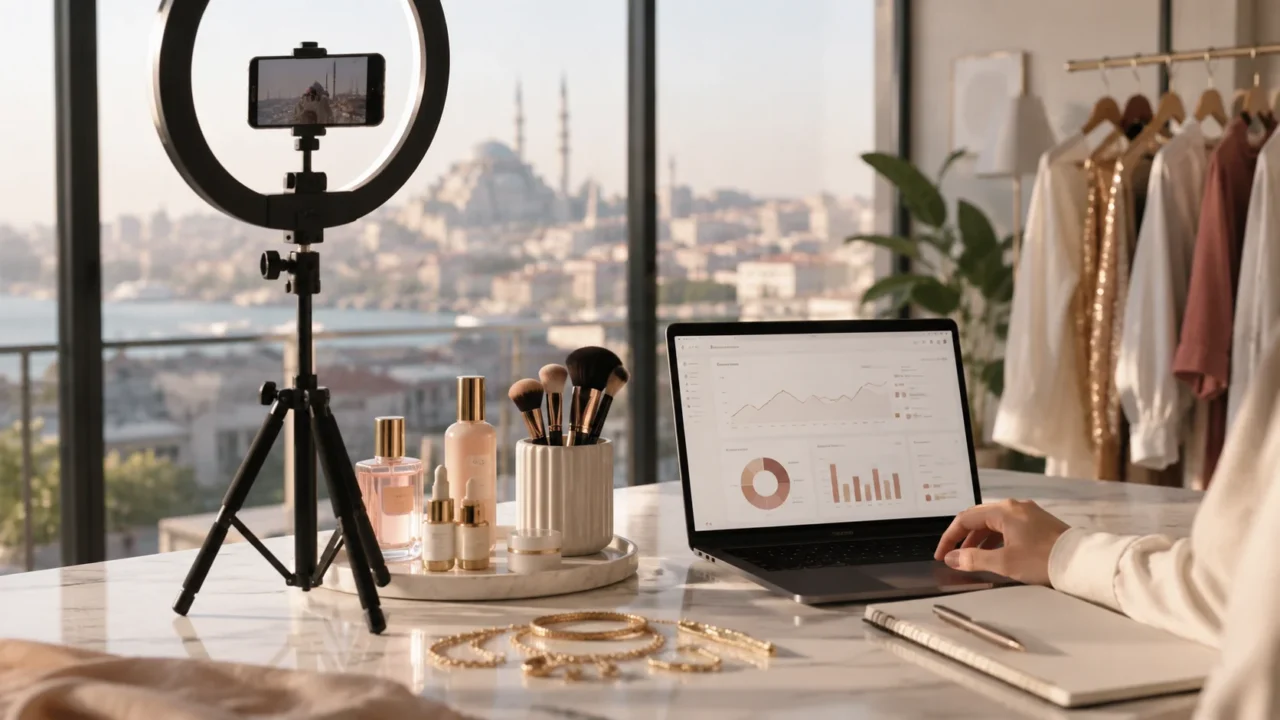
Turkey has more than 54 million active social media users who spend an average of 2.5 hours a day on these platforms, according to a 2025–2026 market guide from Kara Talent. For any brand weighing influencer marketing in Turkey, that combination of scale and attention is rare, and it explains why the country has become one of the most rewarding creator markets in the region.
This guide is built for international brands entering Turkey. For the wider picture beyond influencers, see our complete overview of marketing in Turkey. By the end of this guide, you will understand:
- How big the market is and why engagement runs so high
- What campaigns actually cost, in both Turkish lira and US dollars
- The compliance rules and launch steps that keep your first campaign clean
Table of Contents
- Why Turkey Is a Standout Influencer Market
- The Platforms That Matter in Turkey
- What Influencer Marketing in Turkey Costs
- Influencer Tiers and Why Micro Wins
- The Compliance Rules You Cannot Skip
- How to Launch Your First Campaign
- Working With an Agency vs. Going Direct
- Measuring ROI and Avoiding Red Flags
- Conclusion
- Frequently Asked Questions
Why Turkey Is a Standout Influencer Market
The numbers explain the momentum. Industry data cited in local reporting values Turkey’s digital advertising and influencer economy at roughly 1.5 billion US dollars, with influencer campaign spending alone estimated near 81 million dollars in 2025 and projected to grow about 15% per year toward 165 million dollars by 2030.
Engagement is the real differentiator. Turkish audiences trust recommendations from familiar creators, and micro-influencers on Turkish platforms often reach 4% to 8% engagement rates, well above many global benchmarks, per Kara Talent’s market data.
Cultural reach extends the value further. Turkey is one of the world’s largest exporters of television series, which fuels a devoted fan culture across the Middle East and North Africa. A campaign that resonates locally can echo well beyond Turkey’s borders.
The Platforms That Matter in Turkey
Three platforms carry most influencer activity in Turkey, and each rewards a different content style.
- Instagram remains the anchor for lifestyle, beauty, food, and fashion, where Reels and Stories drive discovery.
- TikTok is where trends form fastest and younger audiences concentrate, making it essential for viral, entertainment-first campaigns.
- YouTube carries deeper, longer-form storytelling and product reviews that keep working long after publication.
Because short-form video dominates discovery, platform-specific optimization matters more than raw follower counts. Our guide on TikTok SEO strategies shows how much reach depends on getting captions, keywords, and posting cadence right rather than simply publishing and hoping.
What Influencer Marketing in Turkey Costs
Pricing in Turkey is often more accessible than in Western markets, especially once currency differences are factored in. As a 2025–2026 benchmark, Kara Talent reports that nano creators (1K–10K followers) charge roughly ₺500 to ₺2,500 per post, with rates climbing steeply for larger creators.
For international comparison, global per-post benchmarks tend to break down like this:
- Nano (1K–10K): around $20–$500
- Micro (10K–100K): around $100–$5,000
- Macro (100K–1M): around $5,000–$25,000
- Mega and celebrity (1M+): $10,000 and up, sometimes far higher
Turkish creators frequently price below these global ranges, which is part of the market’s appeal. One detail international brands often miss: VAT obligations apply to payments to Turkish creators, so budget for tax and contracting, not just the headline fee.
Influencer Tiers and Why Micro Wins
Bigger is not automatically better in Turkey. The tier you choose should follow your goal, not the largest audience you can afford.
- Nano and micro creators deliver the strongest engagement and community trust, and they are cost-efficient for market entry or product testing.
- Macro creators buy broad awareness quickly, useful for launches where reach is the priority.
- Mega and celebrity creators deliver mass visibility but at premium rates and often lower engagement per follower.
For a first campaign, most brands see better returns spreading budget across several micro-influencers than spending it all on one large name. Turkish agencies increasingly lean this way too, favoring authentic, high-engagement niche creators supported by data analytics rather than follower counts alone.
The Compliance Rules You Cannot Skip
Influencer campaigns in Turkey sit inside a legal framework that catches many foreign brands off guard, and disclosure is the first rule.
Turkey’s Advertising Board (Reklam Kurulu) requires clear labeling of paid partnerships. Hidden or undisclosed influencer advertising is prohibited, so every sponsored post must be marked correctly. Getting this wrong risks fines and reputational damage.
Data rules apply as well. Turkey’s KVKK (Law No. 6698) governs how personal data is collected and used, including data gathered through campaign tracking, cookies, and retargeting aimed at Turkish audiences. Foreign brands generally fall within its scope even without a local office.
Because compliance overlaps heavily with agency selection, it is worth reading alongside our companion guide on how to choose a digital marketing agency in Turkey, which breaks down the full three-layer compliance picture for international brands.
How to Launch Your First Campaign
A structured launch reduces waste and makes results measurable. Follow these steps.
- Set a clear objective. Decide whether you want awareness, engagement, or direct conversions, since this shapes creator choice and budget.
- Choose platforms and tiers. Match Instagram, TikTok, or YouTube and a creator tier to that objective.
- Vet creators carefully. Review real engagement, audience quality, and past brand work, not just follower totals.
- Write a tight brief and contract. Cover content rights, exclusivity, revisions, deadlines, disclosure, and payment terms in writing.
- Track from day one. Use UTM links and unique promo codes per creator, and request insight screenshots within 48–72 hours of posting.
Iteration is where Turkish campaigns win. Compare creators side by side after launch, then reinvest in the formats and partners that actually convert.
Working With an Agency vs. Going Direct
Brands can reach creators directly, but a local agency adds real value in Turkey. Agencies handle creator vetting, fair-price negotiation, contracts, VAT and payment logistics, and disclosure compliance, all of which are harder to manage from abroad.
Several Turkish agencies have built proprietary technology to match brands with creators and measure performance, and many manage large creator networks with data-driven reporting. For a brand new to the market, that infrastructure shortens the learning curve and lowers risk.
A capable social media management partner can also fold influencer work into a broader content and paid strategy, so your creator campaigns reinforce the rest of your marketing rather than running in isolation.
Measuring ROI and Avoiding Red Flags
Judge success by outcomes, not vanity metrics. Track engagement quality, referral traffic, promo-code redemptions, and conversions rather than follower gains alone.
Watch for these warning signs when evaluating creators or partners:
- Sudden follower spikes with low engagement, a signal of purchased followers
- Reluctance to share recent, format-specific performance data
- No disclosure of past paid partnerships or unclear labeling habits
- Pricing that ignores usage rights, which often add cost later
A creator or agency that reports transparently and discloses paid work correctly is almost always the safer partner, even at a slightly higher rate.
Conclusion
Influencer marketing in Turkey rewards brands that respect the market’s strengths and rules. Lean on the high engagement of micro-creators, match platforms to clear objectives, budget realistically in lira while accounting for VAT, and treat Advertising Board disclosure and KVKK compliance as non-negotiable.
Handled well, Turkey offers reach and engagement that are hard to match elsewhere in the region. As an Istanbul-based, English-speaking agency, Medyae helps international brands plan, run, and measure influencer campaigns in Turkey with strategy, creators, and compliance managed together. Build your first campaign on a foundation that is set up to convert.
Frequently Asked Questions
How much does influencer marketing in Turkey cost?
Nano creators (1K–10K followers) often charge roughly ₺500–₺2,500 per post as a 2025–2026 benchmark, while micro, macro, and celebrity tiers scale up sharply from there.
Which platforms matter most for influencer marketing in Turkey?
Instagram, TikTok, and YouTube dominate, and Turkish creators frequently beat global engagement benchmarks, with micro-influencers often reaching 4–8% engagement.
Do influencers in Turkey have to disclose paid partnerships?
Yes. Turkey’s Advertising Board requires clear disclosure of paid collaborations, and hidden or undisclosed advertising is prohibited.
Should international brands use a local influencer agency in Turkey?
A local agency helps with creator vetting, fair pricing, contracts, VAT handling, and disclosure compliance, which reduces risk for brands new to the market.
Is influencer marketing in Turkey growing?
Yes. Industry estimates put influencer campaign spending at around $81 million in 2025, projected to grow near 15% per year toward roughly $165 million by 2030.